
Your cart
There are no more items in your cart
If you’ve ever compared felt products side by side and wondered why some feel softer, last longer, or cost more, you’re not alone. This question comes up often, especially among retailers and conscious buyers trying to balance quality, pricing, and ethics.
At first glance, it might seem simple. It’s just wool pressed together, right? Not quite. The way a product is made — by hand or by machine — changes almost everything: texture, durability, environmental impact, and even the story behind the product.
Let’s break it down honestly, without buzzwords or sales fluff.
What’s the Difference Between Handmade and Machine-Made Felt?
Handmade felt is created using natural wool and traditional techniques, resulting in a thicker, more durable, and eco-friendly material. Machine-made felt is produced using industrial processes, often with synthetic fibers, making it more uniform and affordable but less durable.
How Felt Is Made: A Quick Foundation
Felt is created when fibers are compressed using moisture, heat, and friction. That’s where the similarity ends.
- Machine-made felt: Produced using industrial processes with synthetic binders and uniform pressure.
- Handmade felt: Created slowly by skilled artisans using traditional techniques and natural wool.
Both have a place in the market. The difference lies in purpose, quality, and values.
Handmade Felt: Crafted, Not Manufactured
Handmade felt is created by hand, often in small batches, using time-tested methods tied to fair trade and artisan communities.
What Makes Handmade Felt Different?
1. Natural Materials: Uses 100% wool with eco-friendly dyes, resulting in richer colors and softer texture.
2. Texture You Can Feel: Each piece is unique. See examples like stone and pebble rugs.
3. Strength Through Process: Denser and more durable—ideal for felt flowers, décor, and craft supplies.
4. Ethical Impact: Supports fair wages and women artisans.
Read more: How to Start Your Small Business with Handmade Crafts
Machine-Made Felt: Fast, Uniform, and Functional
Machine-made felt is mass-produced using synthetic or blended materials for efficiency and consistency.
Where It Fits Best
- Industrial applications
- Budget craft projects
- Short-term use items
Limitations
- Shorter lifespan: More prone to tearing
- Synthetic content: Often polyester-based
- Limited storytelling: No artisan or ethical narrative
Why Handmade Felt Costs More?
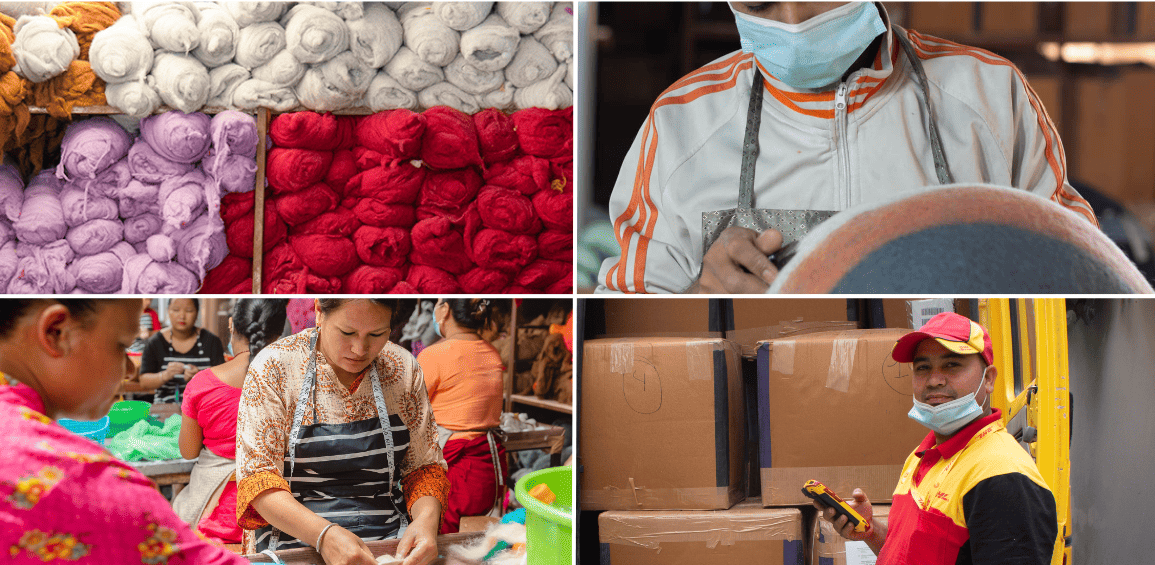
You’re paying for skilled labor, time, fair wages, ethical conditions, and sustainable sourcing.
- Skilled labor
- Time
- Fair wages
- Sustainable sourcing
Explore materials like wool yarns.
Key Differences
| Feature | Handmade Felt | Machine-Made Felt |
|---|---|---|
| Materials | Natural wool | Synthetic/blended |
| Texture | Soft, varied | Uniform |
| Durability | High | Moderate |
| Sustainability | Eco-friendly | Varies |
| Ethical Impact | Supports artisans | Minimal |
| Price | Higher | Lower |
Final Thoughts
If your goal is low cost, machine-made felt works. But for quality, durability, and ethical impact, handmade felt stands out.
At Felt & Yarn, handmade felt represents craftsmanship, community, and sustainability.
FAQs
1. What is the main difference?
The bonding process—handmade is natural and dense, machine-made is industrial and uniform.
2. Is handmade felt better?
Yes, for durability and texture. Machine-made is better for affordability.
3. Why is it more expensive?
Because of labor, quality materials, and ethical production.
4. How to identify?
Handmade feels thicker and slightly uneven; machine-made is smooth and uniform.
5. Which is more durable?
Handmade felt, especially wool-based.
6. Texture difference?
Handmade is richer and more natural; machine-made is flatter.